We use cookies (and equivalent technologies) to collect and analyse information on site's performance and to enable the site to function. Some cookies allow third parties to tailor the ads you see when you visit our site and other third party websites. By clicking 'Agree', you agree to these uses of cookies.
Manage Cookie Preferences
The wedge may be one of golf’s most traditional clubs, but its evolution tells a story of constant refinement. For Cleveland Golf, that pursuit stretches back decades. What began with a commitment to thoughtful shaping and performance-driven design evolved into a broader approach to groove technology, sole geometry, materials, and fitting.
The original 588 Wedge helped establish a benchmark for modern wedge design, while subsequent generations challenged our engineers to find new ways to improve performance. Today, the RTZ 2 represents the next step in that journey. The technology has advanced, the fitting options have expanded, and player expectations continue to grow.
In this month’s Inside the Ropes, we look back at the designs that helped shape the modern Cleveland Golf Wedge, explore the thinking behind their evolution and hear directly from Roger Cleveland about the philosophy that continues to guide the category today.
THE WEDGE THAT CHANGED EVERYTHING
Wedge design is never truly finished. With every generation, there is an opportunity to build on what came before, refine the details and find new ways to improve performance. For Roger Cleveland, that philosophy has been at the heart of wedge design from the beginning.
Introduced in 1988, the Tour Action 588 Wedge would become the defining wedge design in the game of golf. Its traditional shaping and performance-driven design helped establish a blueprint that continues to influence wedge development today. But the significance of the 588 extends beyond its place in golf equipment history. It reflects a design philosophy built around understanding the player, refining the details, and creating a club that inspires confidence when precision matters most.
We went back to Roger to explore the thinking behind the 588, the evolution of wedge design and how the pursuit of improvement has continued to shape the category.
Founder and Advisor, Roger Cleveland
Q:When you look back at the original 588, what was the design challenge you were trying to solve, and what made your approach different at the time?
RC: We wanted to create a larger appearance at address, giving the wedge a more forgiving shape and helping golfers feel more confident over the shot at hand. We also introduced sole grind options to accommodate different turf and sand conditions, recognizing that players needed versatility in how the wedge performed.
Q: When the 588 was first introduced, did you anticipate the impact it would have on wedge design and the Cleveland Golf brand?
RC: Not at all. At the time, I felt we had answered the needs of golfers by creating a larger, well-balanced head design. We paid close attention to every detail, from the hosel through the overall shape, including a slightly tighter leading-edge radius, a balanced toe and a soft top-line radius that transitioned back into the hosel. It was all about creating a head that looked right, felt balanced and inspired confidence.
Tour Action 588 Wedge
HOW PERFORMANCE EXPECTATIONS RESHAPED WEDGE ENGINEERING
As golfers began seeking greater control around the greens, wedge design evolved far beyond the shape of the clubhead. Finding ways to deliver consistent spin and control across different lies, playing conditions, and different types of shots were all new challengers our engineers faced. Over the years, Cleveland Golf continued to explore how groove geometry, face texture and milling could influence performance. Innovations like ZipCore, Laser Milling and Rotex Face Technology reflected the growing relationship between the clubface and the golf ball.
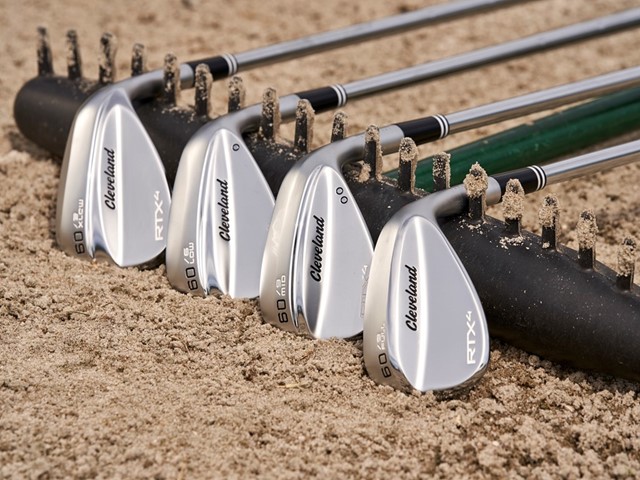
A significant milestone came with the introduction of the RTX family, which brought together those groove and face advancements to deliver greater spin and control, becoming another defining chapter in Cleveland Golf’s wedge history. At the same time, sole design became an increasingly important part of the conversation, with bounce and grind options helping golfers navigate different turf conditions and shot requirements.
RTX 4 Wedge Sole Grinds
Q: Over the last 40 years, which changes in wedge design have had the greatest impact on how golfers create and control shots around the green?
RC: The ability to offer different sole designs and bounce angles has been one of the biggest advancements. Players have different swing types, and they encounter a wide range of turf and sand conditions, so having options that accommodate those differences is critical. Of course, the introduction of Z-Alloy has also been a game changer, and we'll get into that a little more later.
BUILT FOR THE WAY GOLF IS PLAYED TODAY
Meeting the expectations of the modern-day golfer requires a closer look at every element of the club, from the material itself to the way the sole interacts with the turf. Advances in manufacturing and materials have expanded what’s possible in wedge design.
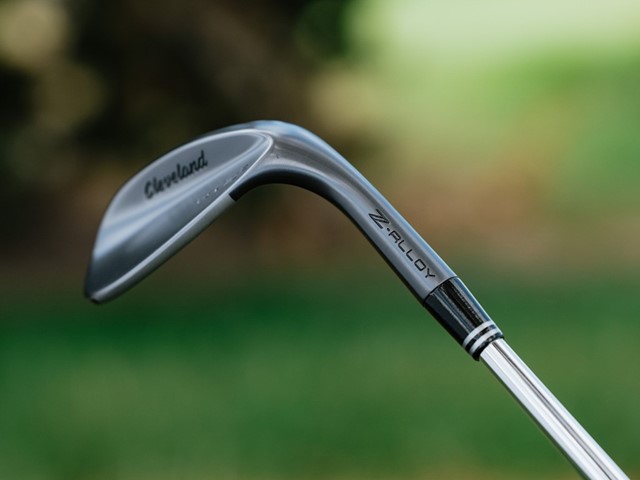
Cleveland Golf’s introduction of Z-Alloy in the RTZ platform represents a more recent chapter in that evolution, bringing material innovation into a category long associated with traditional construction and feel. At the same time, the growing emphasis on fitting has reinforced an important point: consistent performance isn’t just about the club, but making sure the club matches the player’s swing.
Tour players offer a valuable perspective on these details. Utilizing their feedback helps engineers understand how wedges perform under demanding conditions and translate those results into wedges that can perform for golfers with different swings and playing styles.
Q: How have advances in materials and manufacturing changed the opportunities available to wedge designers, particularly with technologies like Z-Alloy?
RC: Understanding mass properties has always been key. At Cleveland Golf, we focus on positioning weight to center the sweet spot on the face rather than having it biased toward the heel. That's an important starting point for wedge design.
Another major advancement is material. For decades, 8620 carbon steel was used almost exclusively throughout the wedge category. Cleveland introduced an entirely new material, Z-Alloy, developed specifically for wedges. Why does that matter? The short game is all about feel, and Z-Alloy provides a softer feel. It also doesn't rust, which helps reduce glare, especially when opening the face for shorter shots. And because the material doesn't rust, the groove edges maintain their original shape longer, helping preserve spin performance over time. Ultimately, that delivers more lasting performance and value for our customers.
RTZ 2 Black Satin Wedge made from Z-Alloy
Roger Cleveland with staffer Shane Lowry
Q: How has working with Tour players influenced the way you think about wedge design, and how do their needs translate into products for everyday golfers?
RC: The Tour has always been and continues to be my testing ground. Players provide critical feedback that is essential to developing the right sole geometry. Spending time with them also allowed me to better understand their shot techniques and how they used the wedge, which helped us develop sole designs that allowed them to perform at their best, as well as the everyday golfer.
FOUR DECADES OF REFINEMENT, ONE ENDURING OBJECTIVE
Looking at the original 588 alongside today’s RTZ 2 reveals just how far wedge design has progressed. Materials have advanced, face technologies have become more sophisticated, and golfers have more access to a broader range of sole configurations than ever before. Yet the purpose behind the club has never changed.
The evolution of Cleveland Golf Wedges has always been on the lessons learned from the one before it, informed by engineering advancements, player feedback and the demands of the game. The result is a category that continues to evolve while holding onto the fundamentals that have always mattered: dependable performance, thoughtful shaping, and the ability to execute a shot with confidence.
Q: When you look at the original 588 alongside today's RTZ 2, what do you see as the biggest difference, and what is the one design principle that has never changed?
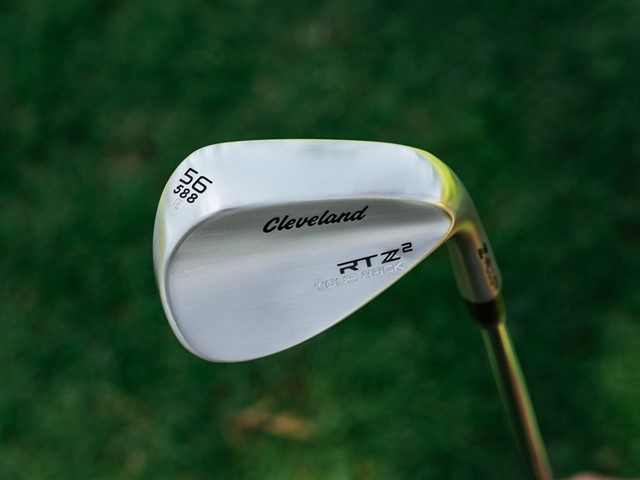
RC: Unfortunately, we didn't have Z-Alloy back in 1988, nor did we have the understanding of mass properties that we have today. The overall shape of RTZ 2 is very similar to the original 588, maintaining that familiar look that inspires confidence. But perhaps the biggest advancement is in the sole design.
Every detail has a purpose. For square-face shots, the sole provides the necessary bounce to prevent digging. When opening the face, there's less bounce in the heel area, allowing the sole to skid through the turf and the leading edge to get underneath the ball. That versatility is incredibly important. You really can't ask for much more from a wedge.
RTZ 2 Wedge 588 Sole Grind
Founder and Advisor Roger Cleveland
Q:What are you most proud of when reflecting on 40 years of Cleveland Golf Wedge development?
RC: What am I most proud of? When it comes to engineering and developing clubs, the wedge probably receives the least attention from most companies. At Cleveland Golf, that's certainly not the case. We've focused on everything from positioning the center of gravity in the middle of the head for improved feel to completely changing the material landscape of wedge design with the introduction of Z-Alloy, which I believe is a game changer. It delivers a softer feel, helps grooves maintain their edges longer for more consistent spin and offers a non-glare finish. There are so many advantages over traditional 8620 carbon steel.
Beyond that, we continue to refine our sole geometries to accommodate different swing techniques and playing conditions. I'm proud of what we've accomplished and the performance we've been able to deliver for every type of golfer, from the most advanced and skilled players to the everyday golfer.
MEET ROGER CLEVELAND
Roger Cleveland is the Founder and Advisor at Cleveland Golf, where he first founded the brand in 1979 as Cleveland Classics. Roger has spent his career shaping the way golfers approach the short game, and his work has made him one of the most important innovators in golf history.